

Going through a divorce is never easy. Finding the right legal help can feel overwhelming.
If you live in Brick, NJ, you need a lawyer who understands both state divorce laws and local court procedures. A qualified divorce lawyer in Brick, NJ can guide you through property division, child custody, alimony, and all the legal steps needed to end your marriage.

Working with a local attorney offers real advantages. They know the Ocean County court system and have experience with judges in your area.
This familiarity can make your case move more smoothly. The right lawyer will explain your options clearly and fight for your interests.
Whether your divorce is contested or uncontested, you deserve someone who will protect your rights and help you move forward with confidence.
Key Takeaways
- A divorce lawyer in Brick, NJ helps you handle all legal aspects of ending your marriage under New Jersey law.
- Local attorneys understand Ocean County courts and can provide services from filing paperwork to representing you in court.
- Your lawyer will guide you through each step and work to protect your financial and parental rights.
Choosing the Right Divorce Lawyer in Brick, NJ

Finding the right divorce lawyer takes some legwork. You’ll want to look at specific qualifications, ask direct questions, and keep an eye out for red flags.
Key Qualities to Look For
Your divorce lawyer should have solid experience handling family law cases in New Jersey courts. Ideally, they focus mostly on divorce and family law, not just general legal work.
Check their track record with cases that look like yours. If you have complicated assets, child custody fights, or business interests, make sure they’ve handled those before.
Communication style matters—a lot. Your lawyer should explain things in plain English and respond to your calls or emails in a reasonable amount of time.
Membership in professional organizations like the American Academy of Matrimonial Lawyers is a plus. It shows they’re serious about staying updated on family law.
Important qualifications include:
- Active New Jersey bar license
- Minimum 5-10 years of family law experience
- Positive client reviews and testimonials
- Familiarity with Brick, NJ court procedures
Interviewing Prospective Attorneys
Set up consultations with at least three divorce lawyers before you pick one. Most offer free or low-cost first meetings, so you can get a feel for their style.
Ask about their fee structure right away. Are they charging hourly or flat rates? What’s the retainer? What’s included?
Get a sense of how they’d approach your case. Some lawyers prefer aggressive litigation, while others lean toward negotiation and mediation.
Ask how they’ll communicate—will you deal directly with the attorney, or mostly with paralegals?
Find out about their availability and how many cases they’re juggling. An attorney who’s stretched too thin probably won’t give your case the attention it needs.
Red Flags to Avoid
Be wary of lawyers who guarantee specific outcomes. No one can promise a result in divorce cases—judges have the final say.
Extremely low fees should make you pause. Good legal help is never bargain-basement cheap.
If a lawyer pressures you to sign a retainer or make decisions right away, walk away. Take your time to think it through.
Poor communication during your first meeting is a red flag. If they don’t return calls or seem distracted, it probably won’t get better.
Attorneys who badmouth other lawyers or local judges? That’s just unprofessional and could cause headaches later.
Understanding the Divorce Process in Brick, NJ
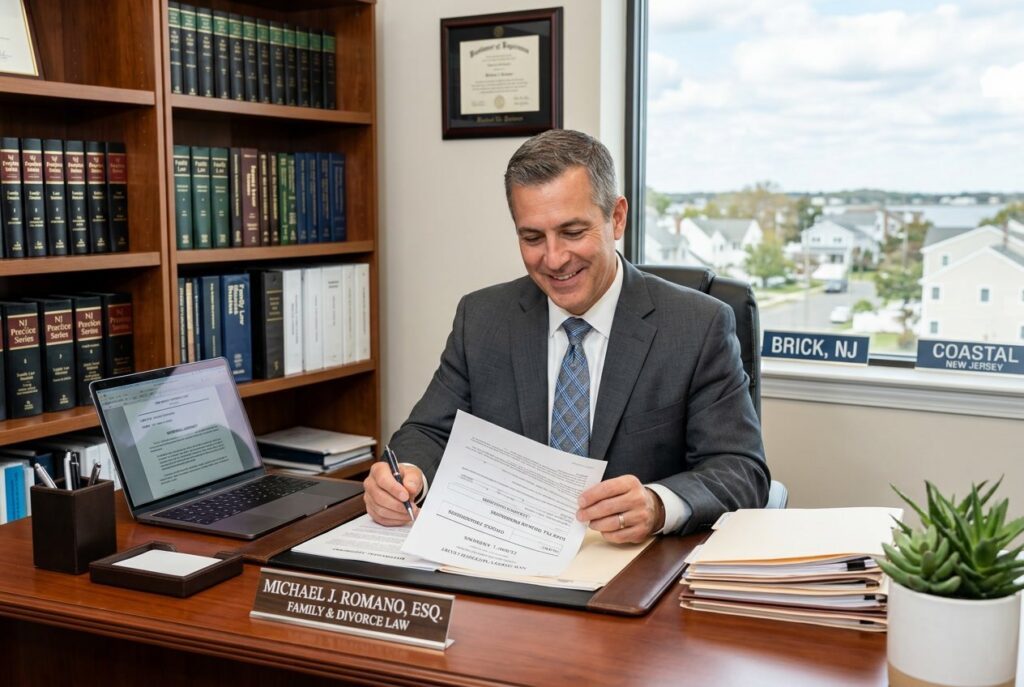
New Jersey has its own set of legal steps for divorce. These rules apply to everyone in Brick and the rest of Ocean County.
You’ll need to file the right paperwork, follow state laws, and pay attention to deadlines.
Filing for Divorce in New Jersey
To file for divorce in Brick, you or your spouse must have lived in New Jersey for at least 12 months straight. The only exception is for adultery cases, which don’t require the year-long wait.
New Jersey offers both fault and no-fault divorce. Irreconcilable differences is the most common no-fault reason, and it requires a six-month separation period. You can also file if you’ve lived apart for at least 18 months.
File your divorce complaint with the Superior Court of New Jersey, Family Division, in Ocean County. The filing fee is around $300, but you might qualify for a waiver if your income is low.
Your divorce lawyer in Brick NJ will help you with all the forms and make sure everything’s submitted correctly.
Steps Involved in the Legal Process
Once you file, your spouse has 35 days to respond. Then comes the discovery phase, where both sides exchange financial info and documents.
You’ll need to gather tax returns, bank statements, property deeds, and retirement account info. It’s a lot, but your attorney will walk you through it.
Many couples try Early Settlement Panels or mediation to work out issues without going to trial. Alternative dispute resolution can save time and money.
If you can’t agree, your case goes to trial and a judge decides. The whole process usually takes 10 to 12 months for uncontested divorces, but contested ones can drag on longer.
Important Deadlines and Documentation
You have to file a Case Information Statement within 20 days of filing or getting divorce papers. This form lists your income, expenses, assets, and debts.
Missing deadlines can really slow things down. Here’s what you’ll need to gather:
- Marriage certificate
- Birth certificates for children
- Recent tax returns (last three years)
- Pay stubs and employment records
- Bank and investment statements
- Property valuations and mortgage documents
- Credit card statements and debt information
Your divorce lawyer in Brick NJ keeps track of deadlines and paperwork. If you have kids, you’ll also need to take a parenting class within 60 days. And those financial statements? They need updating every six months until the divorce is final.
Legal Services Offered by Divorce Lawyers in Brick, NJ
Divorce lawyers in Brick, NJ handle everything from child custody arrangements to property division and support. They work on both contested and uncontested divorces across Ocean County.
Child Custody and Support
Your divorce lawyer in Brick, NJ will help set up custody arrangements that are best for your kids. They handle both legal custody (big decisions) and physical custody (where the kids live).
The attorney files custody requests and negotiates parenting time schedules. They’ll gather evidence about your parenting and living situation if needed.
Child support in New Jersey is based on both parents’ incomes. Your lawyer makes sure everything’s documented and fights for a fair amount. If your situation changes—like a job loss—they can help modify support orders.
Key custody services include:
- Drafting parenting plans
- Negotiating visitation schedules
- Representing you at custody hearings
- Enforcing custody orders
Division of Assets and Property
New Jersey follows equitable distribution laws for dividing marital property. Your lawyer will help identify all marital assets—real estate, retirement accounts, investments, and more.
They’ll value complex stuff like businesses or pensions, sometimes bringing in financial experts. Your lawyer’s job is to make sure you get a fair share of what you’ve built together.
Debts—like mortgages and credit cards—are divided, too. The split depends on things like how long you were married and each spouse’s income.
Anything you owned before marriage usually stays yours. Your attorney will help keep those assets separate.
Spousal Support and Alimony
Alimony is financial support from one spouse to the other after divorce. Your lawyer will figure out if you might pay or receive alimony under New Jersey law.
The court looks at marriage length, earning potential, health, age, and lifestyle. A divorce lawyer in Toms River NJ or Brick will present evidence to back up your needs or ability to pay.
Types of alimony in New Jersey:
- Open durational alimony (for marriages over 20 years)
- Limited duration alimony (for a set time)
- Rehabilitative alimony (while retraining for a job)
- Reimbursement alimony (to repay support for a spouse’s education)
Your attorney negotiates alimony terms during settlement talks. If your finances change a lot after divorce, they can help you request modifications too.
Local Considerations for Divorce in Brick and Surrounding Areas
Brick Township follows Ocean County’s court system. Your divorce case will need to meet New Jersey’s residency rules before you can file.
Family Court System in Ocean County
Divorce cases in Brick are heard at the Ocean County Superior Court, Family Division, in Toms River. This courthouse covers all divorce cases for Brick and nearby towns.
The court uses a scheduled calendar system for hearings. You’ll file your complaint in Toms River, no matter where you live in Ocean County.
Most divorce lawyers in the area know the local judges and court staff, which can really help your case.
The Family Division also handles related stuff like child custody, support, and property division. Depending on how complex your case is, you might have to show up at court a few times.
A divorce lawyer in Toms River NJ who’s often at this courthouse will know the ins and outs of local filing and what the judges expect.
Residency and Jurisdiction Requirements
You or your spouse must have lived in New Jersey for at least one year before filing for divorce. This rule covers most divorce grounds, but not all.
If you’re filing because of adultery, you can skip the one-year requirement. That’s the only exception.
You can file in Ocean County if either you or your spouse lives in Brick or another Ocean County town. The court asks for proof of residency, like a driver’s license, lease, or utility bill.
If your spouse lives in a different New Jersey county, you can pick where to file. Usually, it’s wherever either of you lives.
What to Expect When Working With a Brick, NJ Divorce Lawyer
Your divorce lawyer will guide you through meetings, paperwork, and legal steps. They’ll keep you updated as your case moves forward.
Things start with an initial meeting. After that, you should get regular updates as your divorce unfolds.
Initial Consultation Process
Your first meeting with a divorce lawyer in Brick, NJ usually takes about 30 to 60 minutes. Expect to talk about your marriage, finances, and any kids involved.
The lawyer will ask about your income, assets, and why you’re seeking a divorce. Be sure to bring key documents like tax returns, bank records, and mortgage statements.
Many attorneys, including Jeff Horn Best Divorce Attorney, offer this first meeting for a flat fee, or sometimes for free. During the consultation, the lawyer explains New Jersey divorce laws and how they might apply to your case.
You’ll hear about grounds for divorce, how property might be split, and possible custody setups. They’ll also go over their fees, how they bill, and how long your case might take.
Communication and Case Updates
Your lawyer should touch base with you regularly—phone, email, or sometimes through a client portal. Most Brick divorce attorneys reply to questions within a day or two during the work week.
You’ll get copies of all court filings, anything from your spouse’s attorney, and other important paperwork. Your lawyer should explain these documents in plain English and let you know if you need to do anything.
Before court dates or mediation, your attorney will prep you on what to expect and how to answer questions. Expect monthly bills that break down the work done and costs so far.
Frequently Asked Questions
New Jersey divorce law has specific steps for filing, rules for dividing property and support, and both fault and no-fault options. Understanding custody, alimony, and how to pick the right lawyer can make the process less overwhelming.
What is the process for filing for divorce in New Jersey?
First, you need to meet New Jersey’s residency rule—either you or your spouse must have lived in the state for at least 12 months.
To kick things off, you file a Complaint for Divorce with the Superior Court in the county where you or your spouse lives. There’s a filing fee, and you have to serve the papers to your spouse.
Once your spouse gets the paperwork, they have 35 days to respond. Both sides then swap financial info and other documents. You might attend court hearings or mediation before either settling or heading to trial.
Can you provide an overview of New Jersey’s child custody laws in a divorce case?
New Jersey courts look out for the best interests of the child when deciding custody. There’s legal custody (decision-making) and physical custody (where the child lives).
They weigh things like each parent’s ability to care for the child, the bond with each parent, home stability, and the child’s wishes if they’re old enough. A history of domestic violence also matters.
Courts in New Jersey usually want both parents to stay involved. Joint custody is common if parents can cooperate and communicate about the child’s needs.
How is alimony determined in New Jersey?
Courts in New Jersey consider a bunch of factors when deciding on alimony. They’ll look at each spouse’s income, earning ability, and financial needs.
The length of your marriage plays a big role in how long and how much alimony you might get. They also consider age, health, education, and what each person contributed during the marriage. The standard of living you had together is another factor.
There are several types of alimony here: open durational (for long marriages), limited duration, rehabilitative, and reimbursement. Which one applies depends on your specific situation.
What are considered valid grounds for divorce in New Jersey?
New Jersey lets you file for divorce with either fault or no-fault grounds. The most common no-fault reason is irreconcilable differences—meaning you and your spouse have had ongoing problems for six months or more with no real shot at fixing things.
You can also file for divorce after living apart for 18 months straight. That’s another no-fault route.
Fault-based grounds include adultery, desertion, extreme cruelty, drug or alcohol addiction, institutionalization, imprisonment, and deviant sexual conduct. If you’re filing for fault, you’ll need proof.
How are assets and debts divided in a New Jersey divorce?
New Jersey uses equitable distribution to split up marital property. That means assets and debts are divided fairly, but not always 50/50.
Marital property covers most things you got during the marriage. Inheritances, gifts to one spouse, and what you owned before marriage usually stay separate.
The court considers things like how long you were married, each person’s income and property, and who contributed what. They also look at your economic situation and anything else they think is relevant.
What should I be aware of when selecting a divorce attorney in New Jersey?
You want a lawyer who actually focuses on family law, not someone who just dabbles. Experience with New Jersey divorce cases really matters.
It helps if they know the local court system and have dealt with judges in your area before. That kind of familiarity can make things smoother, or at least less confusing.
Ask about their fee structure right away. Most divorce lawyers go by the hour, but you might find some who offer a flat fee for simpler, uncontested cases.
Don’t be shy about asking exactly what you’ll be paying for. Surprises on bills are the last thing you need during a divorce.
Communication style is huge. You’ll want someone who actually gets back to you and doesn’t leave you wondering what’s going on.
It’s also important they can explain legal stuff in a way that makes sense to you. Not everyone is fluent in legalese, and that’s okay.
Check out reviews online or, even better, ask for references from past clients. That’s usually where you’ll get the real scoop on how they treat people.